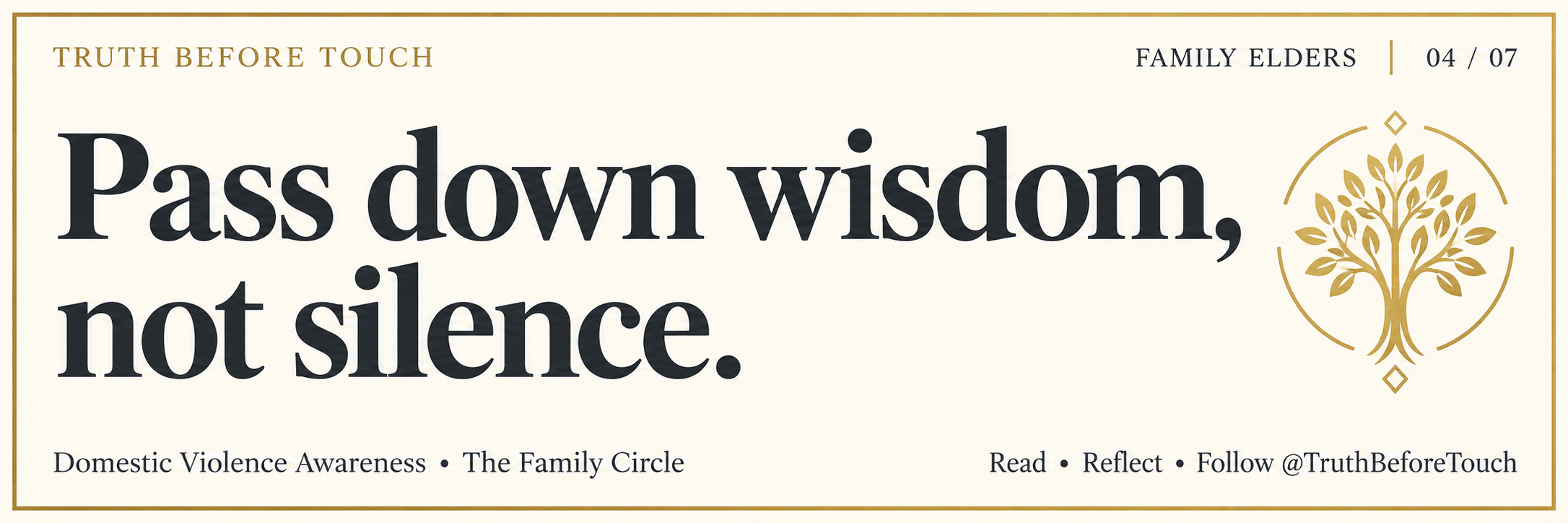
Real conversations create safer tomorrows.
“A man should be able to handle it” is a lesson a family can choose to stop teaching. Family elders can influence whether domestic violence is acknowledged or hidden behind inherited expectations about marriage and masculinity.
The family advice we inherit
A family elder may be the person everyone listens to. Their words can shape whether a disclosure receives care or disappears beneath the instruction to keep private matters private.
Many elders have lived through hardship themselves. They may have learned to survive by remaining quiet, preserving the marriage, or carrying pain without asking for help. Those lessons may explain their response. They do not have to determine the next generation's response.
Domestic violence awareness asks us to examine the advice families inherit.
Changing how male survivors are heard
“A man should be able to handle it” can leave a male victim with nowhere to put his fear. “Think of the children” can imply that his safety competes with the children's needs. “Every marriage has problems” can blur the distinction between ordinary disagreement and coercion or violence.
“Real conversations create safer tomorrows” gives elders a role in changing those patterns. They can use their influence to make a different message acceptable: a family member may need help, and receiving it does not dishonor the family.
An elder may also feel guilt for having advised someone to stay or for missing what was happening. A useful response can begin with a plain correction: “I did not understand. I want to listen now.” The survivor should not have to manage the elder's shame before being heard.
Passing down respect instead of silence
This is also about the example younger relatives receive. Children exposed to intimate partner violence may absorb harmful ideas about power and relationships. [3] Family conversations can affirm that threats and humiliation are not requirements of love.
Elders can offer steadiness without claiming authority over every decision. They can respect privacy, help with practical needs, and encourage support rather than demanding a family confrontation.
TBT's message reaches across generations. Honesty before intimacy can become honesty about the standards we teach before young people form relationships of their own.
Some traditions deserve preservation. Advice that normalizes harm deserves reconsideration.
One way to put this into practice
Reconsider one familiar piece of family advice. Say plainly: “Being harmed does not make you less of a man.”
Follow @TruthBeforeTouch on Facebook and Instagram for family wisdom that makes room for male survivors to be heard.
U.S. support: National Domestic Violence Hotline: 800-799-7233; text START to 88788; TheHotline.org. Use a safe device if monitoring is a concern. Call 911 for immediate danger.
Sources
[1] The Hotline: Children as an Abusive Mechanism.
[2] The Hotline: Ways to Support a Domestic Violence Survivor.
[3] NCTSN: Intimate Partner Violence—Effects.
[4] NCTSN: Children and Domestic Violence—Parent Fact Sheet Series.
Additional guidance: The Hotline: Support Others, Myths Around Men Experiencing Abuse, andDynamics of Abuse.
Support information: The Hotline. Sources reviewed October 2, 2026.
TRUTH BEFORE TOUCH | THE FAMILY CIRCLE